Four tech stories in plain words: AI-written code, a new robot import order, Virgin Galactic's next ship, and a tool that teaches AI helpers.
AppWT Informative Multi-Lingual System
This week brought four tech stories worth knowing about. GitHub says AI-written code is pouring in, the White House wants new trade deals on factory robots, Virgin Galactic named its next spaceship, and a new free tool helps AI helpers learn new tasks. You do not need to act on any of them today, but each one is worth watching.
AI is writing much more code
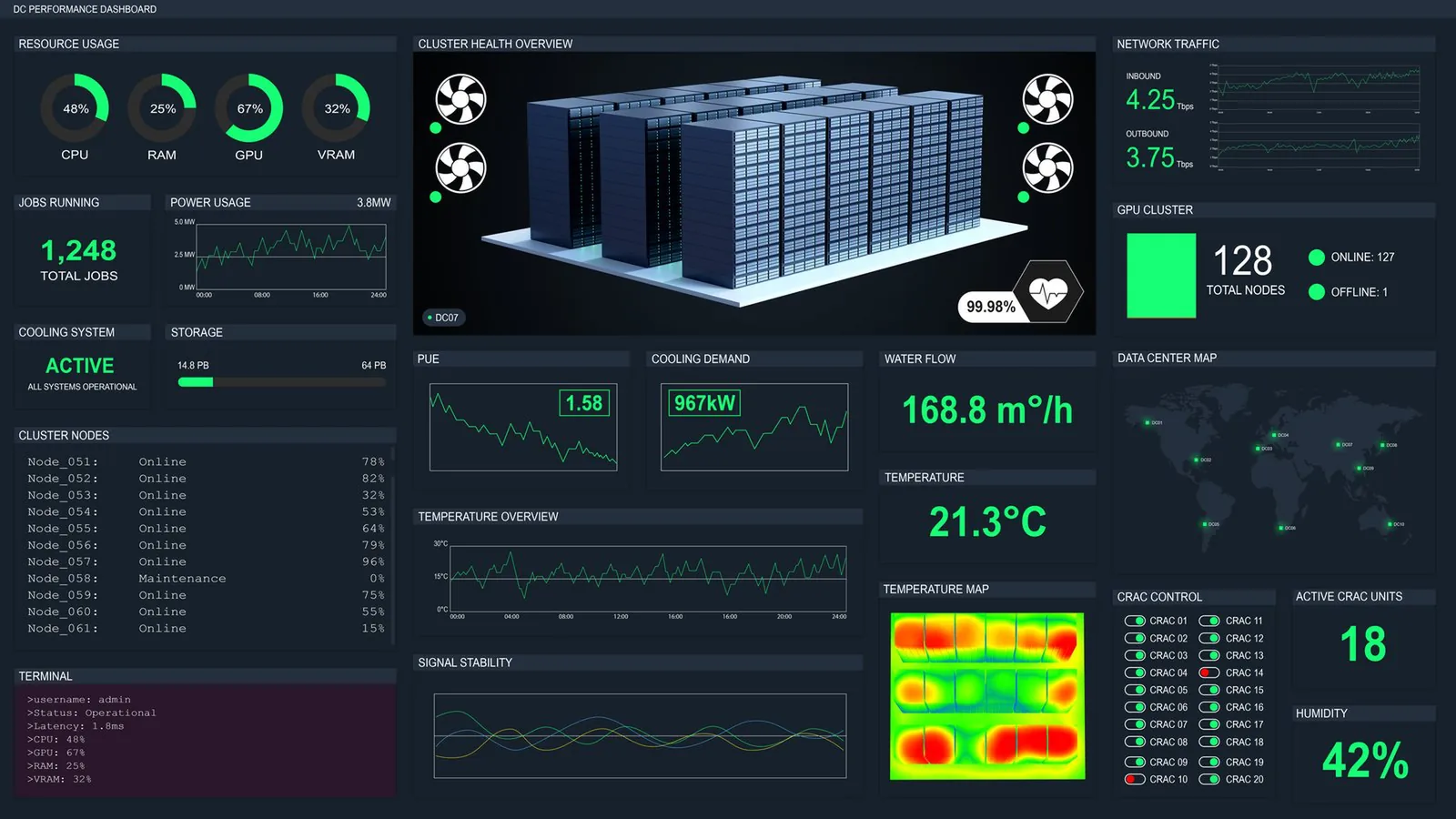
GitHub is a website where programmers store and share their code. According to Tom's Hardware, which reported on a GitHub technical report, the site had to grow fast this year. It added:
- 4 million CPU cores. These are the parts of computer chips that do the work.
- 160 petabytes of storage. That is a huge amount of space for files.
- 50 terabits per second of network capacity.
A "commit" is a saved change to code. Commits grew sixfold in a year. In April, there were 1.4 billion commits per month. In September, there were 7.4 billion. GitHub saw 17.9 billion code pushes in the past 12 months. That is more than all of 2024 and 2025 put together.
GitHub says AI agents are a big reason. An agent is an AI program that can do several steps on its own. By September, over 40% of pull requests were started by an agent, up from 17% in March 2026. A pull request is a request to add a proposed change to a project.
Why it matters to you: Many apps and websites you use are now built with AI help. Each change also sets off automatic tests, which use a lot of computer power.
What to watch: Whether the systems that check all this code can keep up.
New rules may come for factory robots
On October 28, President Donald Trump declared imports of foreign-made factory robots a national security threat, Ars Technica reports. The order orders trade talks with other countries within 180 days. If no deals are reached, the president may add tariffs, duties, quotas or fees. A tariff is a tax on goods from other countries. The U.S. company that imports the goods pays it.
This could matter for car makers like General Motors, Ford and Tesla. It could also matter for Boeing and Lockheed Martin. Many large robot arms come from four makers: FANUC, ABB, Yaskawa and KUKA. They are based in Japan, Switzerland and Germany. Ars Technica says no U.S. company offers similar heavy-duty arms today. The order itself says the U.S. relies on imports for most types of these machines.
The U.S. had nearly 38,500 new industrial robots installed in 2025, per the International Federation of Robotics. In July 2026, the Federal Communications Commission (FCC) banned new models of some foreign-made robots, like robot vacuums. That rule did not cover factory robot arms.
What to watch: Any trade deals in the next six months or so, and whether new fees follow.
A new ship for space tourism
There has been no U.S. space tourism flight for about 10 months, according to Ars Technica. Virgin Galactic now has a new ship. Its first Delta-class spaceship is named Apeiron. The name comes from an ancient Greek idea meaning "the boundless." The public chose it by vote.
The ship is moving from a factory in Mesa, Arizona, to Spaceport America in New Mexico. Next come several steps:
- Finish the flight electronics and software.
- Run ground tests.
- Fly it attached to its carrier plane, VMS Eve.
- Do a drop test.
- Do a powered test flight above 80 km.
These flights are "suborbital." That means the ship goes up to space briefly and comes back down without circling Earth. The company expects the first paying flight "early" in the second quarter of 2027. Ars Technica notes that dates in aerospace often move.
A free tool for teaching AI helpers new skills
A group called Infini-AI-Lab released a free, open-source tool named Hermit, MarkTechPost reports. Open-source means anyone can read and use the code. The first version came out on October 25, 2026.
Hermit works with coding agents like Codex and Claude Code. It does not change the AI model itself. Instead, it trains an add-on, a bit like a plugin. The add-on can hold instructions, skills, memory and tools. A judge scores the agent's work, and the system suggests a better add-on. Every version is saved, so it can be rolled back.
The team shared its own test results. In one test of 624 store support requests, one method scored 45.3. The best other learning method on that benchmark scored 28.7. A version given the hidden rules scored 89.2.
What to watch: These numbers are self-reported. Outside testing will show how well the tool works.
Have a question about anything here? Email me at sales@appwt.com or call (888) 565-0171, and I will answer it.
Sources
- GitHub says massive influx of AI-generated code required extra 4 million CPU cores and 160 petabytes of storage to manage, Tom's Hardware, 2026-10-29
- Trump declares robot imports a national security threat, Ars Technica, 2026-10-29
- The last, best hope for space tourism just rolled onto a runway in Arizona, Ars Technica, 2026-10-28
- Infini-AI-Lab Releases Hermit, an Open-Source Harness Adapter Framework for AI Agents, MarkTechPost, 2026-10-29
Tags
Frequently Asked Questions
Is most code now written by AI?
GitHub's report does not give a total share. It does say over 40% of pull requests were started by an AI agent by September, up from 17% in March 2026.
Are there new tariffs on robots right now?
No. The October 28 order calls for trade talks within 180 days. Tariffs or fees may follow only if no deals are reached.
When will Virgin Galactic's Apeiron fly paying customers?
The company expects the first commercial flight early in the second quarter of 2027. It still needs several tests first, and aerospace dates often change.
Does Hermit change the AI model it works with?
No. Hermit trains a separate add-on, like a plugin, while the AI model stays the same.
Enjoyed this article?
Share it with your network